Check sales minus direct costs before calling growth real
A revenue increase can be work, not money; the first check is sales minus direct costs, then cash flow.
| By | Business Basics Desk — Newsroom |
|---|---|
| Filed | 9 November 2026 |
| Read | 3 MIN |
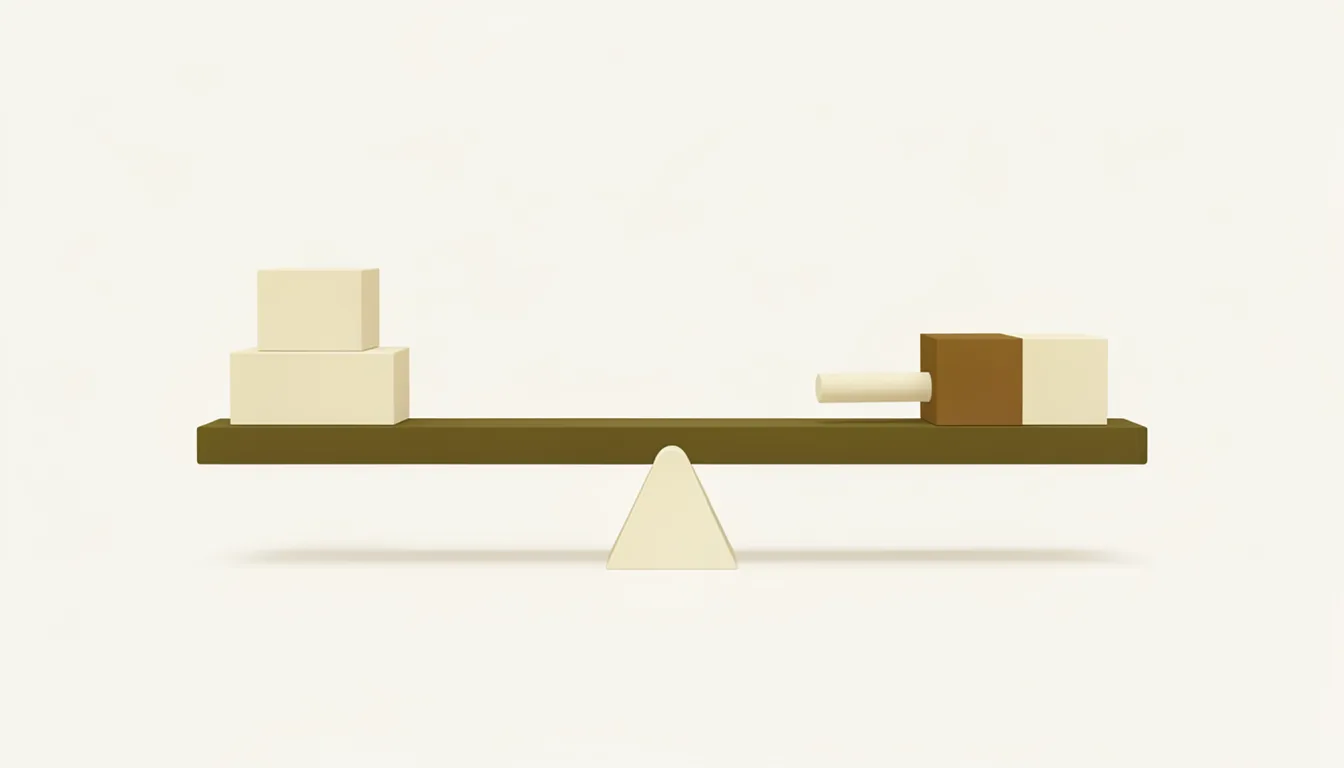
A revenue rise can be a work increase
You see a revenue increase and need to know whether it is actually money kept. Dine Brands reported $248.9 million in Q3 2026 revenue, a 15.1% rise from the prior-year quarter. Sixty Applebee's locations acquired since February 2026 contributed $36.9 million in company-owned restaurant sales to Dine Brands' Q3 2026 revenue. The company-owned versus franchise distinction matters here: company-owned stores add sales, but their direct costs appear in the same calculation. Company-owned restaurant costs were greater than their sales, leaving Dine Brands' Q3 2026 gross profit at about $84.7 million, roughly unchanged. Revenue can climb while the money kept stays flat, falls, or never becomes cash.
The gross margin fell by about 5.1 percentage points. The earnings-per-share number also slipped: Dine Brands' diluted earnings per share, or EPS, for Q3 2026 was $0.37, down from $0.48 in the prior-year quarter. The cash number told the same story. Dine Brands' operating cash flow for the first nine months of fiscal 2026 fell to $37.8 million from $83.3 million a year earlier. In Q3 2026, Dine Brands repurchased about $6.5 million of common stock and paid about $2.4 million in dividends.
The name for the first check, sales minus direct costs, is gross margin. It measures the percentage of sales revenue retained after deducting the direct costs of producing or delivering sales. It is calculated by subtracting cost of goods sold, the direct costs of making or delivering the sale, from sales and dividing the result by sales. Margin ratios can be used to assess how growth translates into profitability. If sales rise and the money-kept number does not, the growth is doing more work than paying you.
Direct costs are the costs that move with the sale
Direct costs move when the sale moves. Sell one more unit and these costs usually rise. Sell nothing and they usually do not. They are the first number because they show whether the sale itself is profitable before the rest of the business is considered.
- Materials, ingredients, or inventory used to make or deliver the sale
- Labor that is tied to the order, such as production time or delivery labor
- Shipping, packaging, and transaction fees charged to complete the sale
- Commissions, platform fees, or royalties paid only when the sale happens
Costs that do not move with the sale belong in a later check. Operating margin is calculated by subtracting cost of goods sold and other operating expenses from sales and dividing the result by sales. Rent, salaried staff, and software subscriptions can matter, but they are not the first number. If you mix them in too early, you may punish a good sale or excuse a bad one.
Cost ratios can improve or worsen as revenue grows
Costs are not fixed. Netflix's costs as a share of revenue fell from 73% to 61% in the decade after its 2012 launch of self-produced shows, and that change is linked to increased overall profitability. NVIDIA's research and development cost rose from 18.5% of sales in 2017 to 27.2% of sales in 2022. Rising costs are not automatically bad, and falling costs are not automatically good. The percentage tells you whether growth is carrying more cost or less.
A rising money-kept number means the growth is doing its job. A flat or falling one means the revenue number is just a bigger number.
Run the check before you scale
For any new product, store, or contract, subtract direct costs from sales; if that number does not rise, you added work, not money. Write down the sales you expect, then subtract the direct costs that rise with those sales.
A rising result means the growth is real money at the first check. A falling result means you are paying to grow. Do not stop there. Ask whether the cash actually arrives. A sale can be recorded before cash is collected, and a cost can hit before the customer pays. Cash flow is the second check: does the money-kept number become money in the bank?
Use the same check before you scale. Opening more stores multiplies the problem when a new store adds revenue but carries direct costs that offset the gain. A contract that adds sales and raises the money-kept number is something worth expanding.
This article is general information, not tax or financial advice. Consult a qualified professional about your situation.